Steam cleaning without wrecking your floors
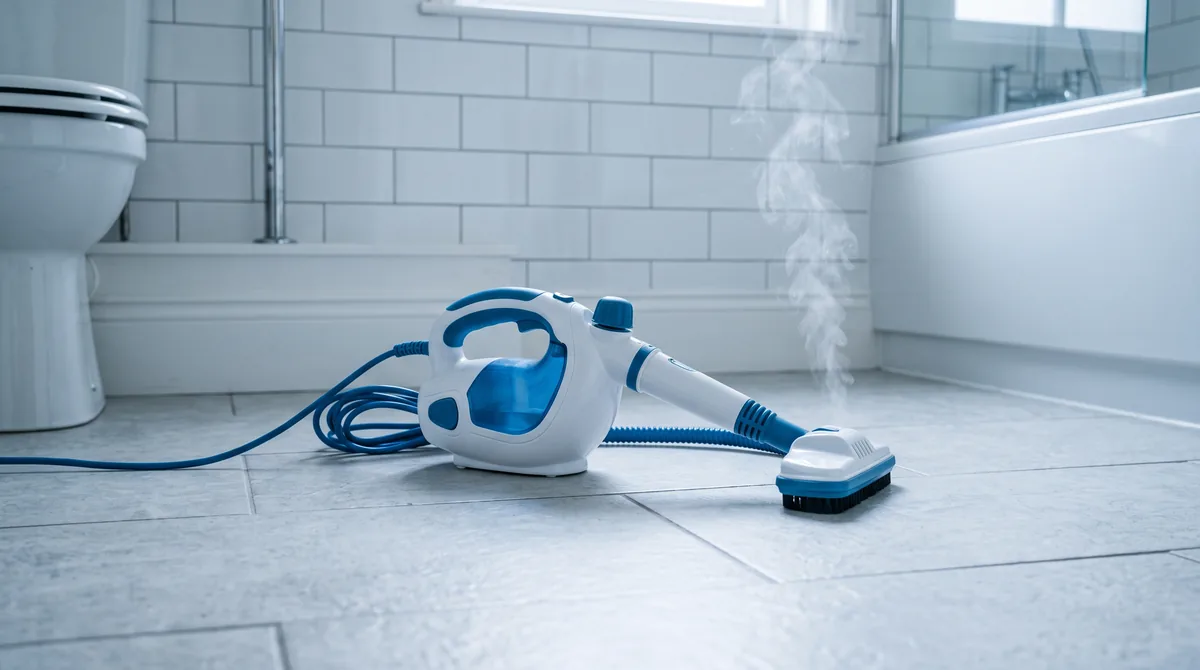
Steam sanitises without chemicals, which is genuinely useful. It also drives moisture into places you would rather it did not.
Why it works
Steam leaves a machine at somewhere around 100°C and hits the surface hot enough to break down grease and kill most household bacteria without detergent. On grout, hobs, oven doors and bathroom tile it does in seconds what scrubbing does in minutes.
The cleaning is done by heat. The moisture is a side effect, and the side effect is what causes the damage.
Surfaces to keep it away from
- Unsealed or waxed wood. Steam lifts the finish and raises the grain. This is the most common expensive mistake.
- Laminate. The core is compressed fibreboard. Moisture at the joints swells it and the swelling is permanent.
- Anything painted or veneered. Heat plus moisture releases adhesive.
- Cold glass. Thermal shock cracks it — never steam a cold window.
Sealed tile, stone, grout, enamel and stainless steel are all fine.
Technique
- Keep it moving. Steam held in one spot forces moisture into the substrate.
- Wipe behind it. Steam loosens dirt; a cloth removes it. Without the wipe you have simply redistributed it.
- Work top down. Condensation runs.
- Ventilate. A closed bathroom after steaming is a humidity problem waiting to become a mould problem.
Cartridge and water
Use distilled or filtered water if your supply is hard. Limescale is what kills these machines, and it builds in the boiler where you cannot see it. A machine descaled every few months lasts years; one run on hard tap water often does not see out its second.
The short version. Excellent on sealed hard surfaces and grout. Genuinely damaging on wood and laminate. Test somewhere hidden before committing to a whole floor.